
The test is positive, and soon your body gets moving. Your breasts feel tight, your belly rounds out, and your skin becomes more sensitive, sometimes drier, sometimes more reactive than before. And one question often comes up: can I still use my usual products?
It’s a perfectly valid concern. You read the labels again, hesitate in front of a shelf, and put away your favorite perfume as a precaution. As a result, many expectant mothers end up applying almost nothing, even though this is precisely when your skin needs the most attention.
At Petit'Éclat in Frameries, we have selected a small range of skincare products designed for this period. Natural-origin formulas with pleasant textures that are easy to apply every day. In this article, you will discover how your skin changes during these nine months, how to choose the right skincare, and which products we recommend in our store.
Your body is changing, and your skin is changing with it
The hormonal changes of pregnancy affect the skin first and foremost. It often becomes drier, more sensitive to friction, and more reactive to products you previously used without any problems. Some women develop pigmentation patches, others get small blemishes, while some see almost no change. All of this is normal.
Your belly, breasts, hips, and thighs gradually stretch, which often causes tightness and itching from the second trimester onward. If the itching becomes severe or spreads to your whole body, speak to your doctor or midwife without delay.
Stretch marks appear when your skin stretches faster than it can keep up. They depend largely on personal factors: genetics, how quickly you gain weight, and your age. No cosmetic product can promise to prevent them, and we prefer to be clear about that. However, a nourishing treatment applied every day makes your skin softer and more comfortable.
And after giving birth?
The postpartum period is another phase of adjustment. Your skin retracts, often more slowly than you might imagine, and continues to need hydration. Most pregnancy skincare products can also be used at this time, so you won’t need to buy a new range after birth.
Choosing the right skincare while expecting a baby
Your first instinct should be to check the ingredients list. A short formula, rich in plant oils and butters, with a subtle fragrance already ticks all the essential boxes. Brands specializing in maternity products deliberately create simple formulations.
Essential oils require particular caution: several are not recommended during pregnancy or breastfeeding. Read the ingredients, and if you have any doubts about a product, an ingredient, or a reaction from your skin, ask your doctor or midwife for their advice. They are the only ones who know your medical history, and their advice will always be better than a blog post.
Finally, texture matters more than you might think. A sticky or slow-absorbing treatment will end up gathering dust. A pleasant treatment that you can apply in thirty seconds after a shower is one you will actually use for nine months.
Treating yourself, not just moisturizing your skin
Applying skincare is also a chance to treat yourself. Many expectant mothers describe this daily routine as their only moment of the day. You might as well make it a ritual rather than a chore.
Here is a simple routine that takes just a few minutes:
- After a shower, while your skin is still warm, apply your oil or milk to your belly, breasts, hips, and thighs.
- Massage in slow, circular motions, without applying too much pressure to your belly.
- On your legs, massage upwards from your ankle to your thigh.
- Follow up with a gentle intimate wash for the intimate area, which is more sensitive during pregnancy.
- Finish with a light mist of maternity-safe fragrance if you like.
This last point is no small matter. Giving up your perfume is one of the little sacrifices of pregnancy, but there are fragrance mists designed specifically for this period. Feeling like yourself is also part of your self-care. If you are already preparing for your baby’s arrival, take a look at our guide to choosing a baby diaper cream.
Our selection at Petit'Éclat
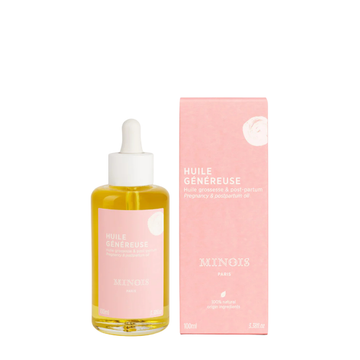
Minois Skincare Oil: a 100% natural-origin concentrate of six organic plant oils (inca inchi, avocado, argan, sweet almond, sunflower, and sesame). Massage it into your belly, breasts, hips, and thighs, and enjoy its delicate orange blossom fragrance. A few drops are also enough for your face. 100 ml size.
Néobulle Body Milk: a melting, non-sticky texture enriched with organic rosehip, argan, and avocado oils, aloe vera, and an active ingredient derived from borojo. It absorbs quickly, so you can get dressed without waiting. 200 ml size.
Monjour Jelly Oil: its gel texture turns into an oil upon contact with the skin, for a smooth, gentle application. Made with organic inca inchi oil, organic camelina oil, and carrot extract, it can be used from the first month of pregnancy and during the postpartum period. It is also suitable for massaging your baby from birth, making it a highly versatile product. 100 ml size.
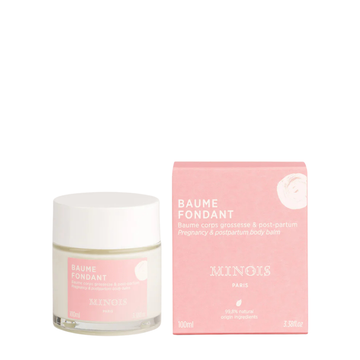
Minois Skincare Balm: a melting balm made from 99.8% natural-origin ingredients, combining Dermochlorella D, organic shea butter, organic avocado oil, and organic aloe vera. Its creamy texture melts into the skin and absorbs quickly. Ideal if you prefer a balm to an oil. 100 ml size.
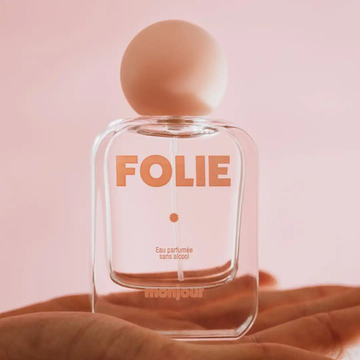
Folie de Monjour Maternity Fragrance Mist: it can be worn during pregnancy and breastfeeding. Its notes of rose, neroli, orange blossom, and white musk remain soft and subtle, a real plus when your sense of smell becomes sensitive. 50 ml size.
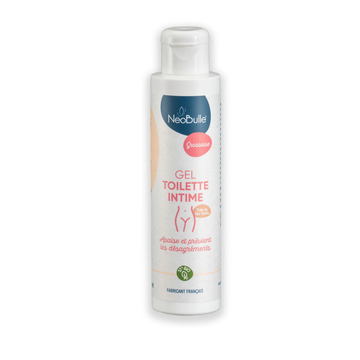
Néobulle Intimate Wash Gel: a formula made from 98% natural-origin ingredients, based on calendula, sage, and cornflower floral waters. It cleanses gently and can be used from age three and throughout adulthood, including during pregnancy. 150 ml size.
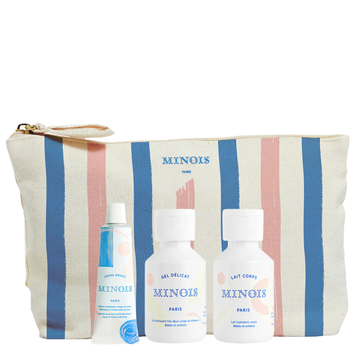
Minois “Baby Essentials” Kit: for your maternity bag, this cotton kit includes an intimate wash gel, a gentle cream, and a body milk that can be used from birth by the whole family.
In summary
- Your skin changes from the first few weeks: dryness, sensitivity, and tightness are common and normal.
- No treatment can promise to prevent stretch marks, but well-nourished skin is more comfortable.
- Choose short formulations and always check the ingredients, especially for essential oils.
- If you have any doubts about a product or a reaction, speak to your doctor or midwife.
- A pleasant texture that is quick to apply is key to sticking with your routine for nine months.
- Most of these treatments can also be used during the postpartum period, and Monjour Jelly Oil is suitable for massaging your baby.
Want to create your nine-month routine? Discover all our pregnancy and postpartum skincare products online, or visit us in our Frameries store: we will take the time to recommend the right treatment for your skin.
And if you are already thinking ahead, you will find all our products and ideas for little ones in our baby collection, and our article on the baby snack box will help you safely introduce them to new tastes.




0 comments